



Private sector involvement in climate action is key to closing the climate finance gap, which by some estimates ranges in trillions of dollars. MIGA's ability to de-risk and mobilize private capital is essential for unlocking private sector potential for addressing climate finance needs in developing countries.
People in the least developed countries and emerging economies are disproportionately affected by climate change risks and impacts. Development inequality worsens these effects on the poorest. Within the next two decades, 143 million people could be internally displaced by changing weather patterns, droughts, desertification, food insecurity, and other vulnerabilities linked to climate change.
MIGA has made climate change a priority area of its strategy along with low-income (IDA) countries and fragile and conflict-affected situations (FCS). In FY26, MIGA delivered $3.02 billion in climate finance, 41 percent of total guaranteed loans and investments by volume, and embedded climate co-benefits in approximately 79 percent of its projects. Climate change is a strategic priority for MIGA, alongside support for low-income (IDA) countries and fragile and conflict-affected situations (FCS).
Our Strategy
MIGA is more focused than ever on delivering climate finance projects, including in IDA and FCS.
MIGA's products have proven to provide protection to cross-border private investors seeking long-term investments in climate mitigation and climate adaptation activities across diverse markets and regions. As one of the few institutions providing long maturity guarantees, MIGA is uniquely positioned to help deliver transformational climate action
In fulfillment of the ambitions of the World Bank Group Climate Change Action Plan (WBG CCAP), MIGA is committed to accelerating its efforts, including by continuing to seek opportunities to innovate, leverage its partnerships, and participate actively in joint work programs of the World Bank and IFC. As an example, MIGA is fully engaged in ensuring that the WBG Country Climate and Development Reports (CCDRs) reflect the role of de-risking and credit enhancement solutions in mobilizing private investment for climate action and, where relevant, that the CCDRs aim to capture the potential evolution and implications of political and sovereign credit risks due to unabated climate change impacts in the whole-of-economy framing.
MIGA is working to raise its share of climate adaptation finance through four channels: (i) applying larger amounts of blended finance; (ii) working with the World Bank and IFC to build on upstream government engagement that catalyzes private investment in adaptation; (iii) mainstreaming climate risk screening across all MIGA operations; and (iv) working with clients to include resilience measures in project design.
This is especially relevant for infrastructure projects, where assets typically have long useful lives. For example, MIGA-supported road and power projects have incorporated climate adaptation measures to minimize the impacts of extreme weather, with MIGA’s early engagement with clients helping to embed these measures into project design.
MIGA committed to have 100 percent of its projects be Paris-aligned by July 1, 2025, and actually met that deadline a year ahead of schedule.
Turning to mobilization of private sector finance for climate, MIGA will deliver global climate adaptation and mitigation benefits at scale through enhanced de-risking applications to support new climate opportunities. We will closely collaborate with the World Bank and IFC to leverage the expanded upstream collaboration across the Bank Group to generate greater private sector engagement in climate activities downstream.
MIGA will also strengthen its work with the World Bank and IFC to boost innovation to meet both the opportunities and challenges of climate change. For example, market mechanisms such as carbon markets and emissions trading schemes have the potential to reduce the total cost of implementing countries' Nationally Determined Contributions (NDCs)—with about half of the current NDCs signaling interest in using forms of international cooperation through Article 6 of the Paris Agreement. MIGA is working with the World Bank on assessing how MIGA products can be deployed to de-risk carbon markets and emissions trading schemes that will be formed under Article 6.
Finally, MIGA will strengthen its collaboration with public and private partners to tackle climate challenges through complementary projects, products and win-win solutions.
Key Transitions
The WBG CCAP focuses on increasing our collective efforts on key systems transitions to tackle greenhouse gas emissions.
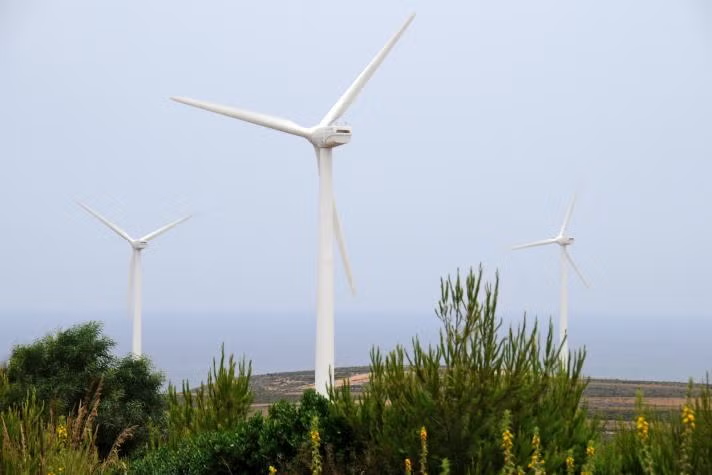
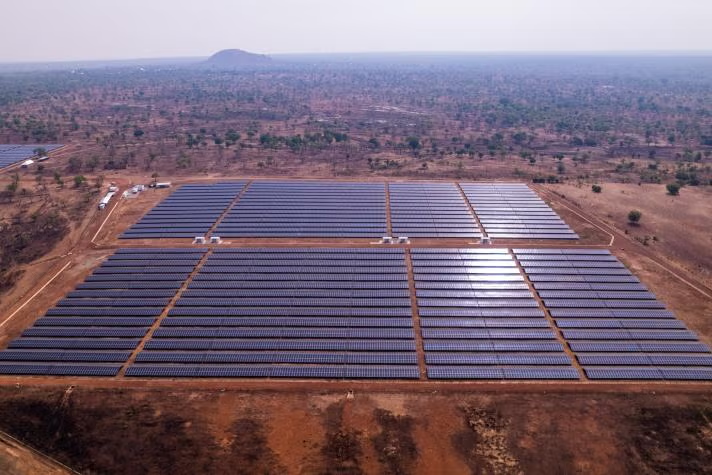
In energy systems, MIGA will continue its successful work to support cross-border foreign direct investment into renewables. We will continue to be innovative, using our guarantees to underwrite micro and mini-grids, and storage solutions, that can accelerate delivering sustainable energy and electrification to underserved communities, specifically in IDA and FCS countries.
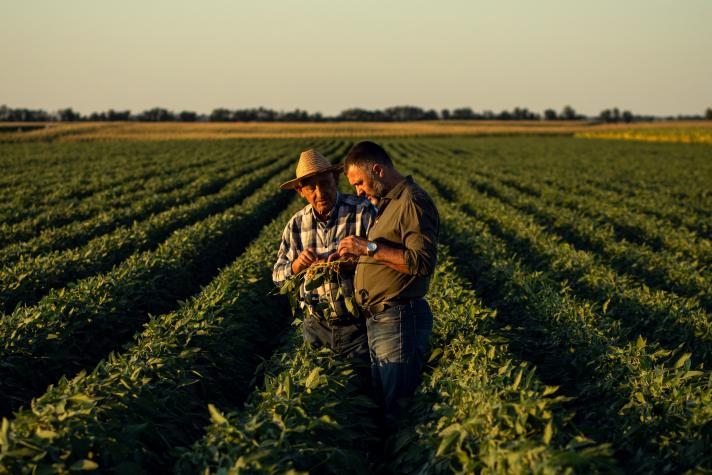
In agriculture, food and manufacturing, MIGA will work with clients to support the adoption of low-carbon and climate-resilient actions across all segments of the value chain.
At MIGA, biodiversity considerations are mainstreamed into projects through our Environmental and Social Performance Standards. While historically we have not included a climate change lens in this work, moving forward MIGA will work to build in the impacts of changing climate on biodiversity patterns.
In MIGA's sustainable cities projects, building on our experience, we will reach further to find innovative applications of our products to support natural green infrastructure that is environmentally sustainable and resilient. MIGA will focus on working with its clients to make certain that infrastructure projects are adequately climate-proofed and do not result in increased vulnerability to climate change.
MIGA will also bolster its impactful strategy to deliver climate finance through our work with the financial sector. MIGA's engagement on greening financial institutions will include providing support to financial institutions that will phase out coal-related projects as early as possible but no later than 2030. MIGA will also support these clients through various greening channels including (i) scaling up climate finance and green loans; (ii) greening their own corporate footprint; and (iii) supporting climate risk screening as an integrated risk tool in their credit processes.
MIGA and Paris Alignment
As part of the World Bank Group's Climate Change Action Plan, the institution made a commitment that all its financing flows and guarantees will be consistent with the goals of the Paris Agreement and a country’s pathway towards low greenhouse gas emissions and climate resilient development. Paris Alignment of the WBG’s new financing flows is the most comprehensive institutional undertaking ever done by the institution to reconcile both goals: development and climate.
In line with the Paris Agreement, the institution’s approach recognizes that countries have common but differentiated responsibilities and respective circumstances in implementing the Paris Agreement. As such, our Paris Alignment assessments are operation, context, and time-specific, and for a given set of development objectives. All WBG operations support the deployment of lower-carbon options as applicable, whenever technically and economically feasible; prevent carbon lock-in; and ensure climate-related risks have been assessed and reduced to an acceptable level through the design of projects.
In line with the Joint Multilateral Development Banks (MDBs) Methodological Principles for assessing Paris Alignment, MIGA committed to aligning 85% of its new projects with the objectives of the Paris Agreement starting July 1, 2023, and 100% of these projects starting July 1, 2025. It met that deadline a year early.
MIGA applies the following Joint Methodological Principles:
Lists of universally aligned and universally non-aligned activities are also available.
MIGA’s Paris Alignment assessments are conducted in the context of the WBG’s mission of contributing to a world free of poverty on a livable planet. The assessments take into account each country’s pathway towards low greenhouse gas emissions and climate resilient development, and determine whether an activity advances, hinders, or is “neutral” when it comes to achieving progress towards the goals of the Paris Agreement.
A MIGA guarantee is considered aligned when:
- On climate mitigation, it contributes to decarbonization pathways (e.g., renewable energy) or supports activities that do no harm (e.g., water supply systems that are not emissions intensive); and
- On climate adaptation and resilience, it manages physical climate change risks effectively, with appropriate measures tailored to the climate risks that are identified, such as drought-resilient crops or setting up early warning systems.
Press Release
MIGA Supports First Conservation Agriculture Project in Brazil
Press Release